
Once filming is complete, it's time to move on to post-production. If time permits at the time of shooting, the director writes down his favorite takes. These are the shots that will be used to premaster the film.
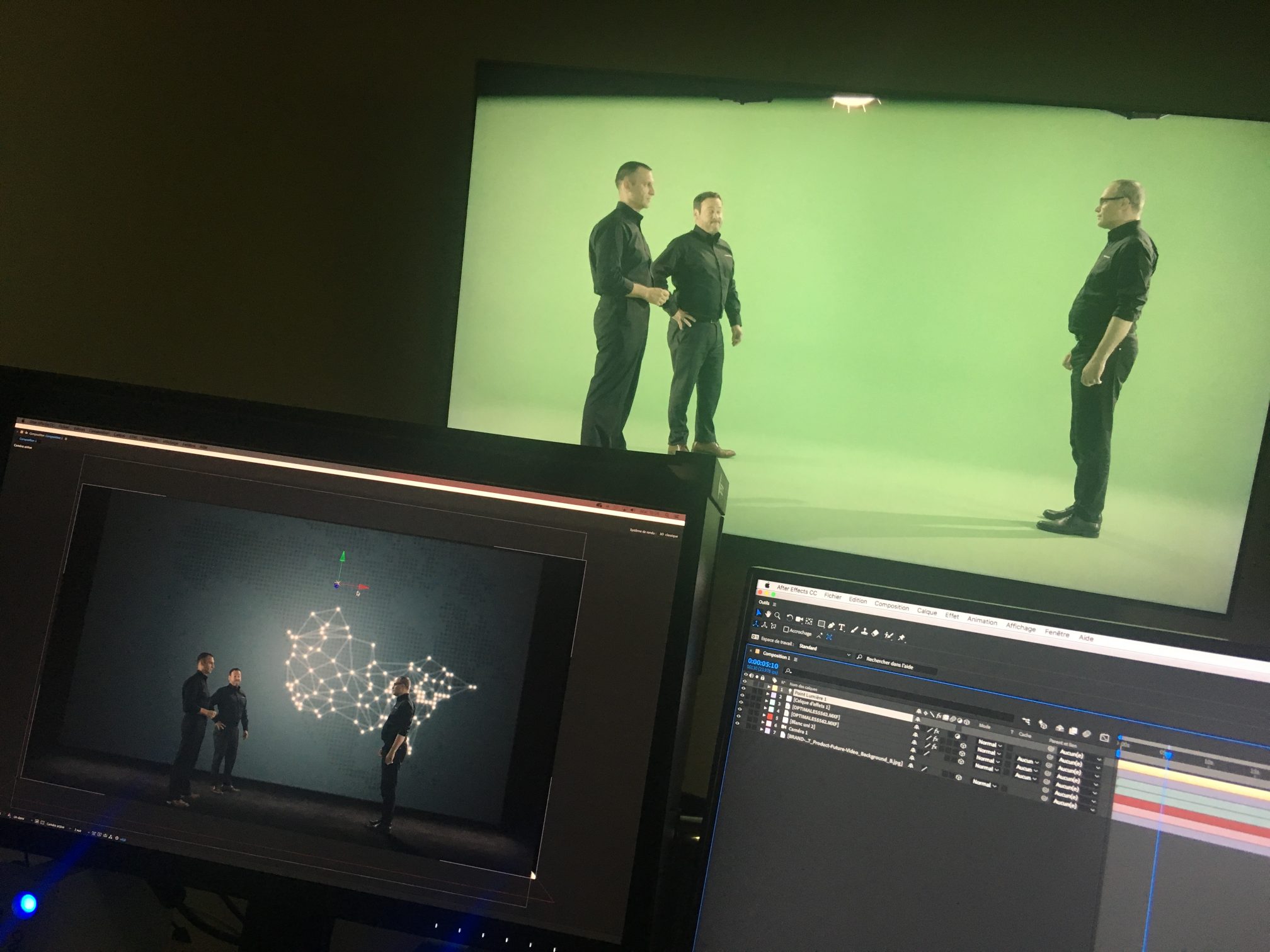
Pre-assembly: a validation tool
This stage consists of putting all the shots (filmed images) in the necessary order for the video to unfold as planned in the script. It also involves writing the titles, which will be animated in motion design a little later.
If a narration has been planned, the director may create a narration guide himself. This method gives the director greater control over the pace of the film.
Following this first step, the search for music should be undertaken if it has not already been done. A good director will have discussed with you the anticipated tone of the video. His or her musical research will be carried out with this in mind, as will the choice of narrator. The choice of music is important, since it's what will set the tone of the video. Pre-editing then follows the rhythm of the music.
We then give you the pre-assembly for content approval. Even if at this stage the color hasn't been done, the logo isn't animated and the titles are written in ordinary type, you'll have a good idea of what your production will look like at the time of final delivery.
You'll then need to check all content for accuracy and errors. If any corrections need to be made to the pre-assembly, they will be, right up to final approval.
Image coloring: aesthetics in color
Since, in principle, the editing process should remain unchanged, the film's color can then be applied shot by shot. The color treatment applied to the images is the "finish" we give them. It can be inspired by the company's colors or graphic charter, to create a coherent, aesthetic approach.
This stage of the process requires a certain amount of time for creation and computer rendering, which can be quite time-consuming. If changes are made to the film at this stage, it costs time.
Once the color has been applied everywhere, the customer must approve the treatment. We then move on to the motion design stage.
Motion design and graphic design: inseparable
As its name suggests, motion design is graphic design in motion. Nowadays, especially in the field of corporate films and advertising, it's a must. With the quality and multitude of movements it's possible to create, motion design gives a rich and sumptuous representation to the company.
Motion design can be created from scratch if required, or from the company's own graphic documents. A complete graphic document has a color chart identified by universal codes, and the name and representation of the "fonts" (writing characters) to be used for text. All this illustrated with all the possible applications. The graphic charter is a very useful tool for professional visual personalization, which all graphic designers can then easily apply.
Your company logo and graphics must be delivered to our production team in full resolution quality. So it should come as no surprise that graphic requests are very demanding at this stage. The effort put into quality is well worth it.
Once the motion design is complete, we'll ask for your approval to record the narration and sound effects.
Mix and narration: the reward
Narration can only take place once the text has been definitively approved. Changes made at this stage could result in discrepancies with the content that has been edited to accompany the text. Can you see the problem? Recording takes place to the rhythm of the music and under the direction of the director, who ensures the right tone and intonation.
It's a good idea for you to be present at this stage, so that you can approve the performance on the spot. Alternatively, we can send you an example of the video in low resolution for approval during the recording period, so that you can take advantage of the narrator's presence. That way, if anything goes wrong, it can be corrected immediately.
Once the recording has been completed and approved, sound effects are added and the whole thing is mixed. The final video can then be sent to you.
We hope this text has enlightened you about the steps involved in video production, and will help you to prepare yourself if necessary.
Does the process seem tedious?
Believe it or not, it's not as bad as it looks, and our team is on hand to guide you through the process. However, you can be sure that active participation on your part increases the coefficient of success of a production; you need to know your business, be able to identify its strengths, and not be afraid to dare to put it forward with originality.
A good video production will help you stand out from your competitors, and bring new ideas to the table. Those who've tried it have recognized the energy it takes, but haven't hesitated to repeat the experience!